
What is identity? The word has many meanings. It can mean who you are, where you are from, how you are different or similar to others, and so much more. Identity can refer to you as an individual or to a group of people you might belong to. It can be your character, personality, something that makes you either stand out or fit in, it’s everything you are.
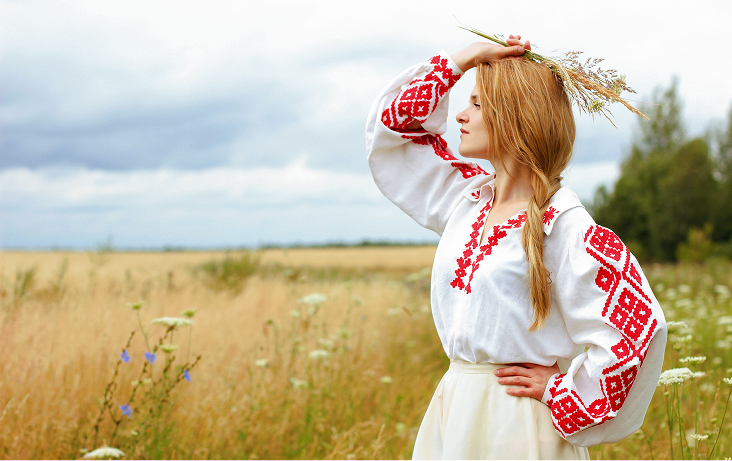
Identities in Belarus 1939-1944
Before the Second World War, Belarus was home to a variety of identities, languages and cultures. Russians, Belarusians, Lithuanians, Tatars, Jews, Poles all lived across the territory of modern-day Belarus. Today’s western Belarus territory belonged to Poland before 1939, so the main language both spoken and taught in schools was Polish. Yiddish was also very prevalent due to the many Jewish communities all across the region.
This all changed after the Second World War. As in other areas they occupied, Nazi Germany wanted to erase Jews from existence and came close to succeeding in Belarus.
Religious identity was banned and ethnic identity was only shown in passports, usually for the government to keep lists of ethnic minorities. Very often, Soviet Jews were not allowed to work or study somewhere simply because they were Jewish and the Jewish cultural institutions were banned. The government would identify people as Jews, and put this in their passports. This was known as the Fifth Paragraph.
The fear of the Holocaust and Soviet suppression muted Holocaust survivors after the war and as a result they could not tell their stories. The Soviet government, focused on the glory of the war and the narrative that everyone suffered the same. Soviet Jews fully lost their ability to practice Judaism and express themselves culturally. Yiddish was banned. The situation has only improved in modern-day Belarus.
Confusion of identities
Around 100,000 Jews were killed in the Minsk Ghetto. It was one of the largest ghettos in Europe but is less well known. A large proportion of the Jews in Minsk were already Communists before 1941. Openly practising religion under Communism was not allowed. When the Germans arrived in 1941, some people didn’t understand why Jews were being put into a ghetto. In theory, all Soviet citizens were equal so why were they being treated differently?
Some Soviet citizens chose to collaborate with the Germans, others did not and helped people escape the ghetto. The Nazi occupation of the Soviet Union was a dangerous time. Local people had everything to lose by resisting the Germans. To resist took great courage.
The Minsk Ghetto mostly consisted of wooden houses and was supposed to have a wall around it. A decree was announced by the Germans that the Jews would build a wall around the ghetto, but it never happened. The ghetto was fenced with barbed wire and children would sneak in and out, at great risk, to find food and arms. Some people managed to escape and hid in the forests where they became Partisans. To join the Partisans you had to have a weapon.
German and Austrian Jews were deported by train to Minsk, and were imprisoned in the ghetto. The Belarusian Jews could not understand German and they called them the Hamburg Jews. These Jews from western Europe were culturally very different, and the Belarusian Jews did not identify with them. Belarusian Jews tried to convince the western Jews to join arms and resist. Due to the language and cultural differences, most Western Jews trusted the German soldiers more, and they truly believed they had been sent there to work. Despite their differences, to the Nazis, their prisoners only had one identity: they were Jews. In the end, they all met their fate either in the ghetto or at Trostenets, on the outskirts of Minsk, where the Jews were taken to be killed. Trostenets was marked officially with a memorial in 2015.
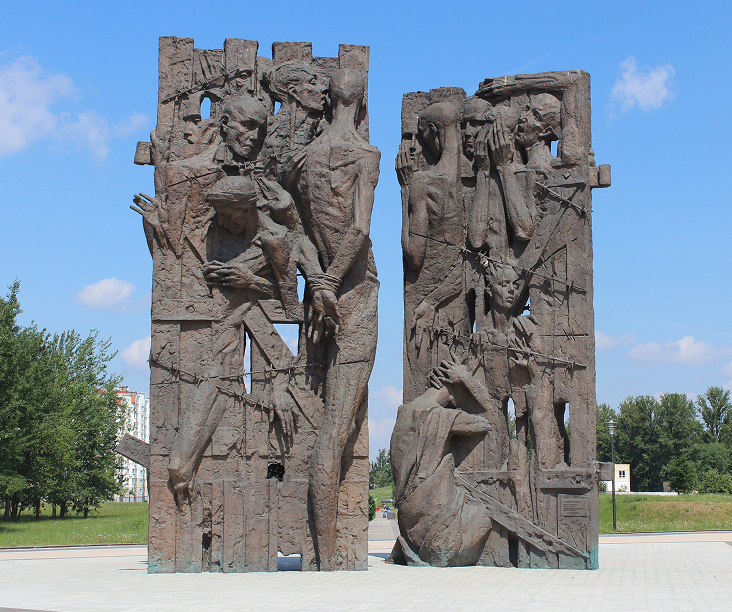
The village of Porechye: a place of courage and compassion
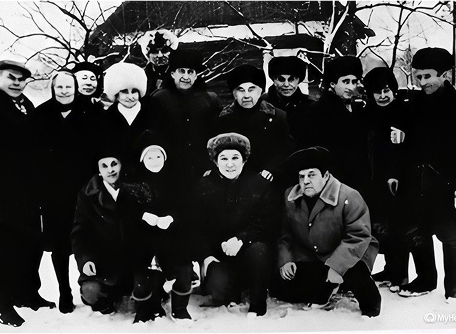
The Minsk Ghetto was a cruel place. Most of the Jewish prisoners were killed though some managed to escape the ghetto with the help of partisans and Belarusian non-Jews. A village just outside of Minsk, called Porechye, became the home of around forty Jewish children who managed to escape from the ghetto and were able to remain there for the duration of the war. This was possible because a partisan battalion, located nearby, provided protection from the Germans and the local police, who in many cases were collaborators. The partisans worked with Porechye locals to take care of the Jewish children. Many times, the partisans would warn the locals that the Germans were coming through the village. The villagers would hide the children, usually in the nearby swamps and marshes.
The Germans passed through the village many times, but due to the strong community of Porechye, the Germans never found out that forty Jewish children were hidden there. To the Porechye locals, these children were children first and foremost. They were not the enemy of the people, as the Germans believed the Jews to be.
Cultural, religious and ethnic identity was irrelevant to the villagers of Porechye. It was a miracle that no one in Porechye betrayed the children and told the Germans about them. This example shows that people working closely together to save the children brought moral good to the world and should forever be remembered in history. Porechye led by example of what it means to truly be together.
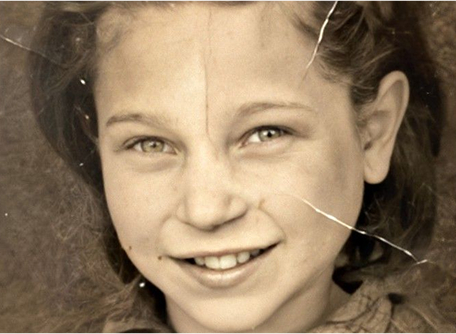
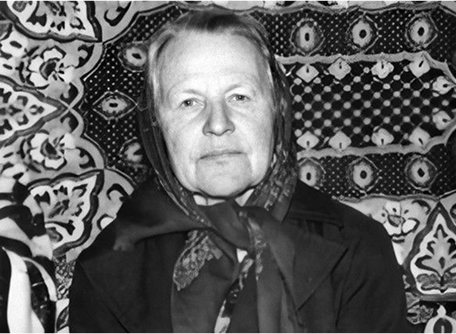
‘At any moment we had to be prepared for the unexpected appearance of Germans. If they arrived, we would have to run and hide in the swamps and bogs in and around the forest. The partisans would gather some of our belongings into baskets and take us across the river into the swamp. Nastya and I would usually go to the same place, sometimes hiding there for two or three days. In the winter, it was terrible and we almost froze.’
From ‘The Whole Village Deserves the Award of Righteous Among the Nations’ by Maya Krapina (Chapter from ‘We Remember Lest the World Forget – Memories of the Minsk Ghetto’)